
Round table: Dead Media Spirit in Audio/Visual Culture
Thursday, 24. 9. 2025 at 14.00 / Vetrinj mansion, big hall
Bruce Sterling’s concept of “dead media” anchors this concept in something more intense and crucial for audiovisual culture than merely failed technologies or nostalgic curio formats or devices. “There’s a difference between this pleasurable contemplation of the technological sublime and the actual coherent understanding of life and death of media,” he states in his famous 1995 Manifesto. Let’s engage in the latter activity with the help of three outstanding practitioners of audiovisual arts – Thomas Renoldner (Austria), Filip Kovčin (Poland), and Claudia Munksgaard-Palmqvist (Denmark). Since their experimental works revolve around movement, light, and editing (being fundamental conditions of cinema), the discussion asks what remains essential when technologies undergo transformations, leaving some media unwanted and / or forgotten.
Thomas Renoldner's research on Simon von Stampfer's stroboscopic discs returns to the origins of animation and the invention of the illusion of movement. Filip Kovčin’s research on Gabriel Lippmann's interference photography reconsiders light itself as the primary material of image-making rather than merely a means of representation. Claudia Munksgaard-Palmqvist’s practice in experimental editing and found footage explores how meaning emerges through joining, connection, and absence. The fusion of such perspectives invites a broader reflection on several interconnected themes: raw material, role of editing, the nature of inventions, and the meaning behind media archaeology.
The discussion is moderated by Olga Bobrowska.
Panelists:
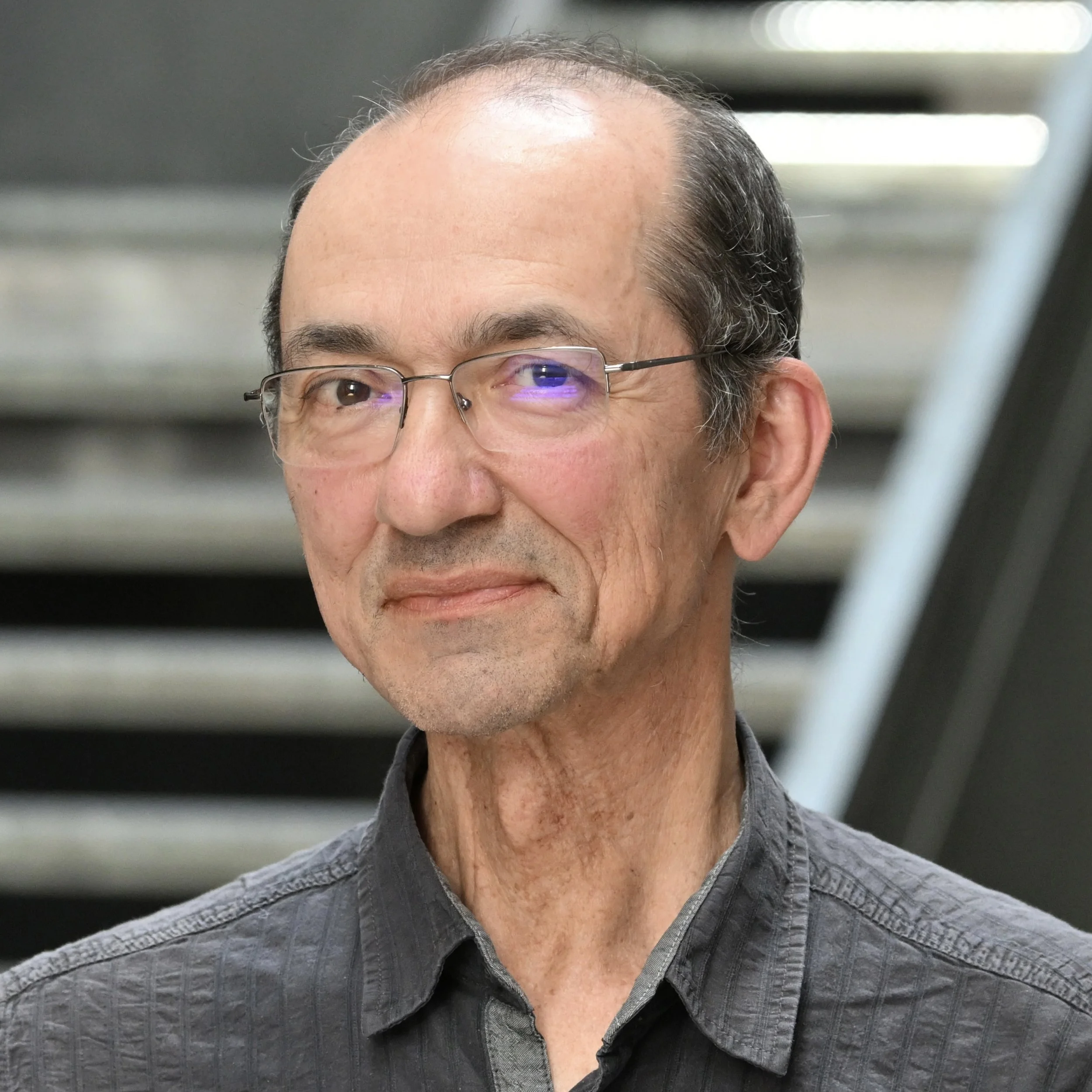
Thomas Renoldner
From 1976 onwards, he was active as a self-taught artist in the fields of graphic art, music, film, and installation. He studied psychology and educational theory in Innsbruck in 1979-83, where he also organized productions of experimental theater and music, as well as two film festivals in the local cultural center KOMM. He executed more cultural and artistic activities in Salzburg from 1983-87, and besides more films, music and performances created the installation Filmplastik (Film sculpture) by combining three different Super-8-film projections. From 1989-94 he was a student in the master class for Experimental Design of Maria Lassnig (later Christian L. Attersee) at the University of Applied Arts in Vienna, mainly working in the Studio for Experimental Animation, led by Hubert Sielecki. After leading numerous animation workshops and teaching animation at several schools in Austria, he was the Head of the Animation Lab of the Academy of Fine Arts in Vienna, and teacher for numerous animation talents from 2005-2025. Director of several films, among them multiple award-winners: Sunny Afternoon (2012), DONT KNOW WHAT (2019) and Stampfer Dreams (2024). He is a researcher, founder and co-director of BAAF (Best Austrian Animation Festival), and co-founder and Head of Selection of the international Animation Avantgarde competition at the VIENNA SHORTS filmfestival.
“Stroboscope and Phenakistiscope as instruments in human sciences, popular media and the arts; 1800 and today” by Thomas Renoldner
The lecture dives into the (animated) film prehistory. In the early phase of the industrial revolution Simon von Stampfer (1792-1864), Austrian scientist and inventor, created a device that allowed to infuse series of still images with movement. Like Joseph Plateau, who presented his Phenakistiscope in the same time, he had been inspired by the results of experiments connected to visual perception, which the great scientist Michael Faraday had published before. Stampfer called his quite similar device Stroboscopic Discs and presented it in Vienna in 1833. The invention of the Stroboscopic Disks / the Phenakistiscope is considered one of the significant contributions to the development of cinematography.
For Thomas Renoldner, Stampfer’s discs also represent the primeval cell of animation, they show all kinds of animated loops from abstract to figurative and from experimental to documentary, and therefore foreshadow the variety of genres in animated film. In 2025 Renoldner published an AR-enhanced book "Stampfer Dreams", based on Simon von Stampfer's animated loops.

Claudia Munksgaard-Palmqvist
is a Danish experimental filmmaker and animator. Through her work as a filmmaker, animator, festival film programmer, projectionist, co-creator of a non-profit cinema and teacher she wants to make experimental film more accessible for a broader audience and start conversations about how we see experimental films. Her passion for experimental animation led her out of Denmark in 2017 to study for a bachelor’s degree in animation at Volda University College in Norway. Her graduation film Film Found has been screened all over the world at film festivals in and outside of the animation category. Her love for film has always been the red thread that ties together her jobs and projects. She has written articles for the WeAnimate Magazine. Her next film Visulization of a Cut was made in 2024. She worked as a festival film programmer for Volda Animation Film Festival and Void International Animation Film Festival. She also worked as a cinema projectionist in different art house cinemas in Denmark and Norway. Claudia has been involved with stop motion projects at the animation studios JPL Films (FR) and Mikrofilm (NO). She is a selector at StopTrik IFF.
Claudia Munksgaard-Palmqvist film practice:
Munksgaard-Palmqvist works with experimental animation, film festival curation, underground screenings and teaching. Her work involves found footage, physical materials and stop motion animation. Her practice is centered around the exploration of the relationship between the human condition and film as a physical medium. Through collecting and assembling she makes montage films exploring humanity captured on film, the passing of time and film history. Her work focuses on filmmaking as a collaboration between conceptual ideas and the inherent qualities of the materials. “How amazing it is to be able to observe life in motion – slowed down, sped up, looped, and stopped – to take it all in.”

Filip Kovčin
a film director and an actively practicing film editor (PSC), also working as a screenwriter and as a supervising expert in visual effects and post-production for feature-length fiction and documentary films. An academic lecturer at the Cinematography Department of the Polish National Film, Television and Theatre School in Łódź. Author of articles on film technology, film analysis, and editing published in academic journals (“Film Quarterly”) and professional magazines (“Film & TV Kamera”, “FilmPRO”). Co-author, together with Dr Piotr Kucia and Jerzy Rudziński, of two books on digital film technology: Illumination (2021) and Enlightenment (2022). The first of these was also published in an English-language edition and is currently distributed by the official publishing arm of the British Society of Cinematographers (BSC). Creator of numerous short-form audiovisual works, including commercials and music videos. Recipient of multiple awards for music videos, including Poland’s most prestigious music awards, YachFilm and Fryderyk. Awarded a Gold Record by ZPAV (the Polish Society of the Phonographic Industry) for artistic contribution to the album Yugoton. He also works as a co-producer and associate producer of documentary and feature films, and is the creator of television and music programmes.
Filip Kovčin’s research: “Lippmann Plate: the Forgotten Revolution in Photography”
The research is focused on Gabriel Lippmann's (1845-1921) forgotten photographic method for recording color images based on light interference, rather than through perceptual RGB filtering. The subject matter is situated within media archaeology, highlighting how his approach represented a paradigm shift - capturing light's intrinsic structure rather than mimicking human vision. Kovčin aims to outline the historical context from Ibn al-Haytham's intromission theory to modern imaging, emphasizing that Lippmann's technique preserves color as a physical phenomenon. Although technically demanding and commercially unviable, his method inspired later developments like holography and remains relevant for rethinking image recording. The lecturer proposes reconsidering Lippmann's principles today as a potential foundation for new imaging technologies that record light's raw interference patterns.
01.
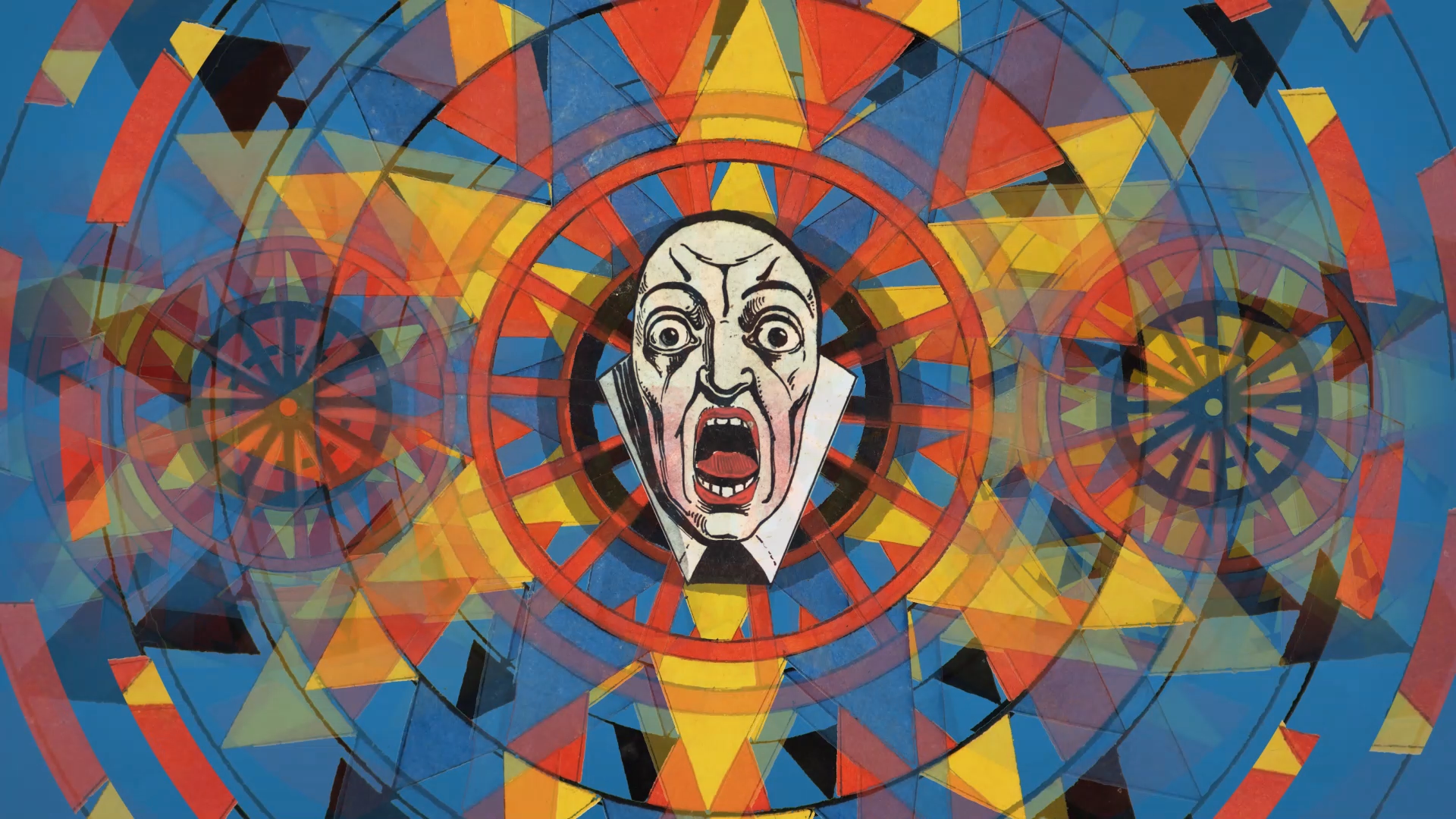
STAMPFER DREAMS
Thomas Renoldner
2024, Austria, 11’50”
STAMPFER DREAMS is a homage to the scientist Simon von Stampfer, who presented his invention of the Stroboscopic Discs in Vienna in 1833. These discs show all kinds of animated loops from abstract to figurative and from experimental to documentary, and in this way forshadow the variety of genres in animated film. All characters and animated sequences in STAMPFER DREAMS are taken from these “optical magic discs”. The film begins at the time and in the alpine environment of Simon's childhood and vaguely follows his biography. Starting from the sight of the wheel of a watermill, three “dreams” illustrate Simon’s visions of developments in technology and art from the age of the industrial revolution in the 19th century to the present day.
02
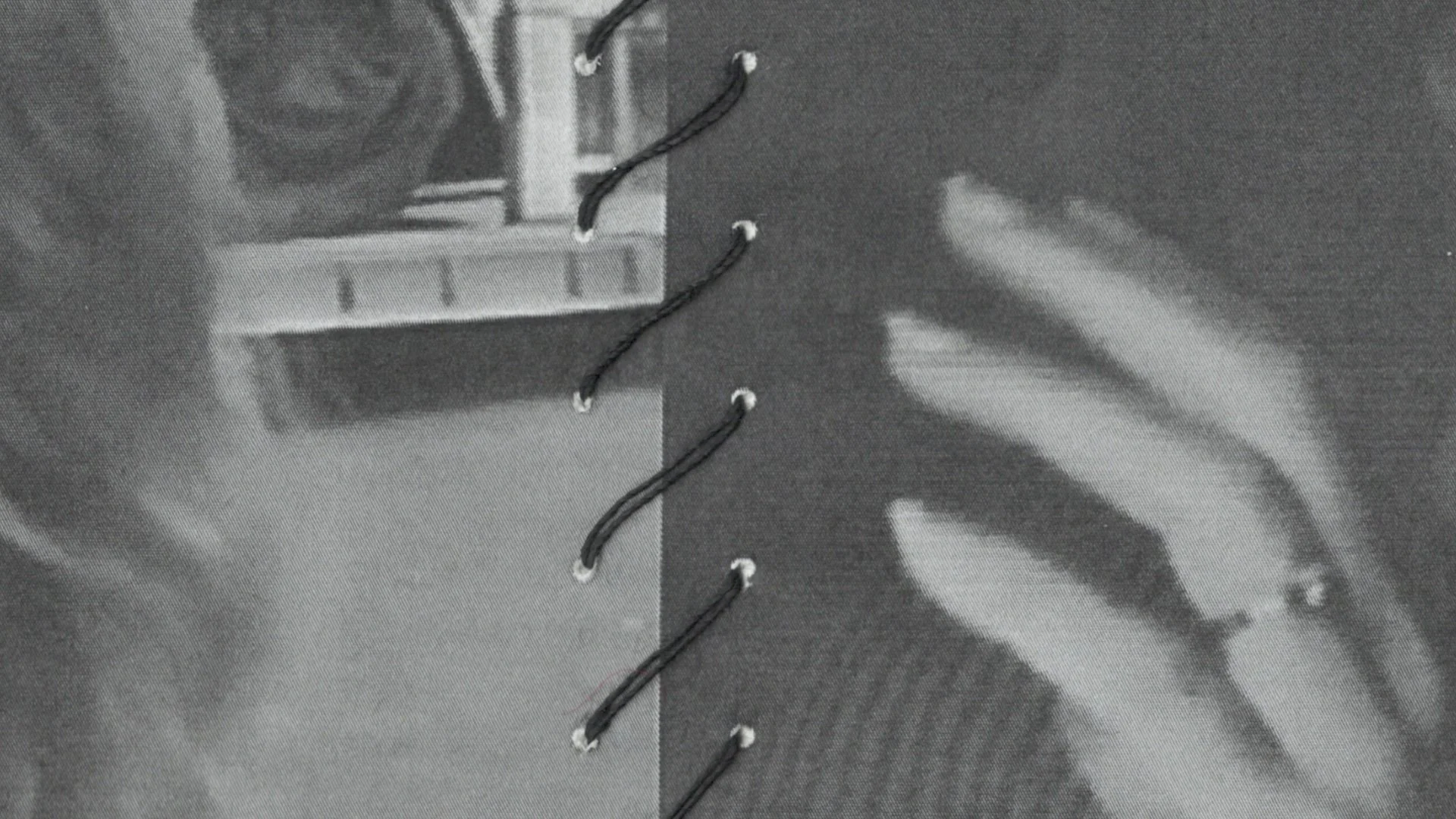
A Visualization of a Cut
Claudia Munksgaard-Palmqvist (Late Love Production)
2024, Denmark, 7’20”
A Visualization of a Cut is an experimental animated short film in three chapters exploring the connection between the cinematic cut and human relations extracted from home movies. The film is a meditation on life, love and loss explored through montage editing in home movies from six Scandinavian families, the materiality of paper and the thread that joins them together. The film is alternating between analysis and emotion and invites you to rethink the traditional conception of film and film narrative.